check_circle error info report
local_mall 0
local_mall 0
Menopause & Hair KLYVER Editorial
Menopause and thinning hair: 5 things to understand before trying another product
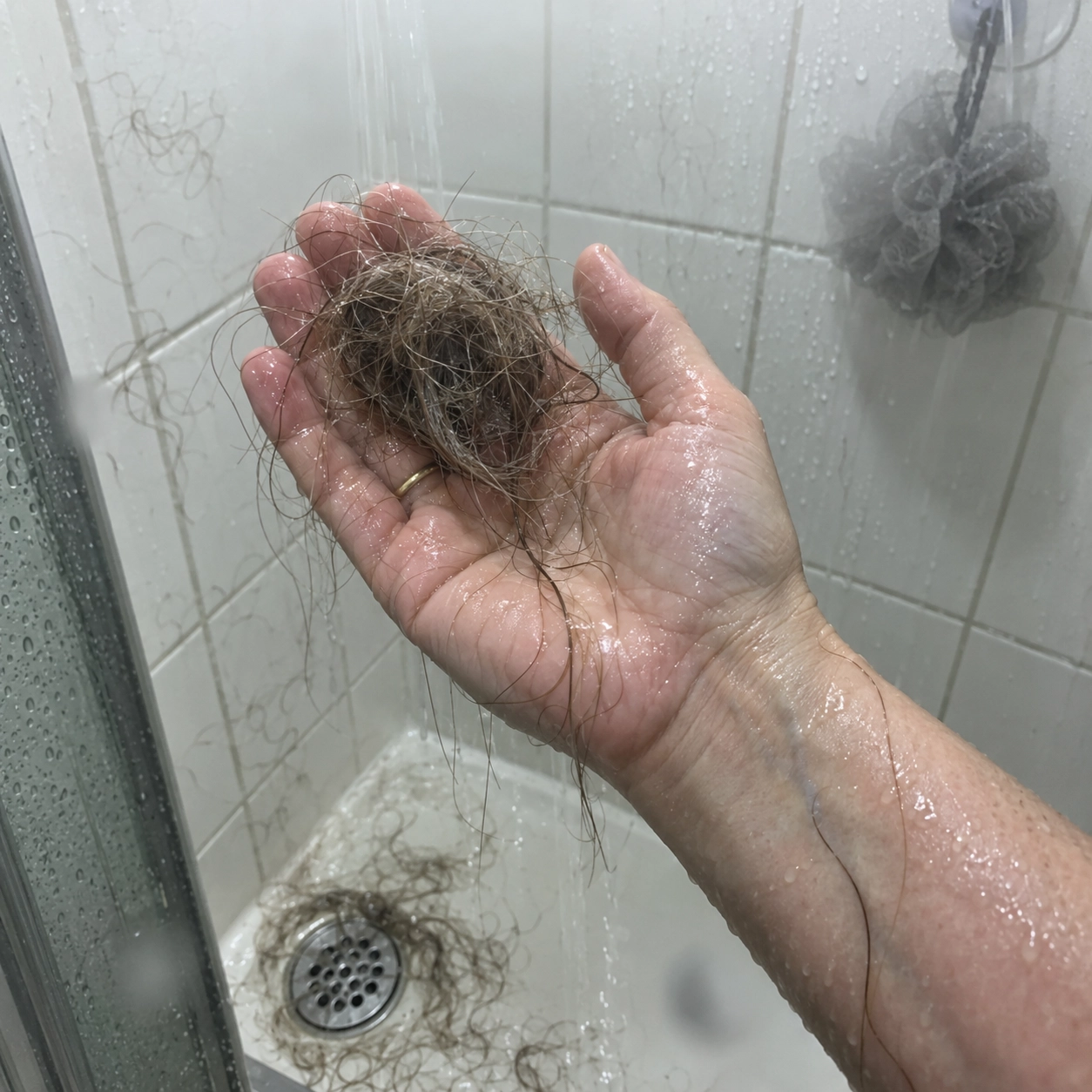
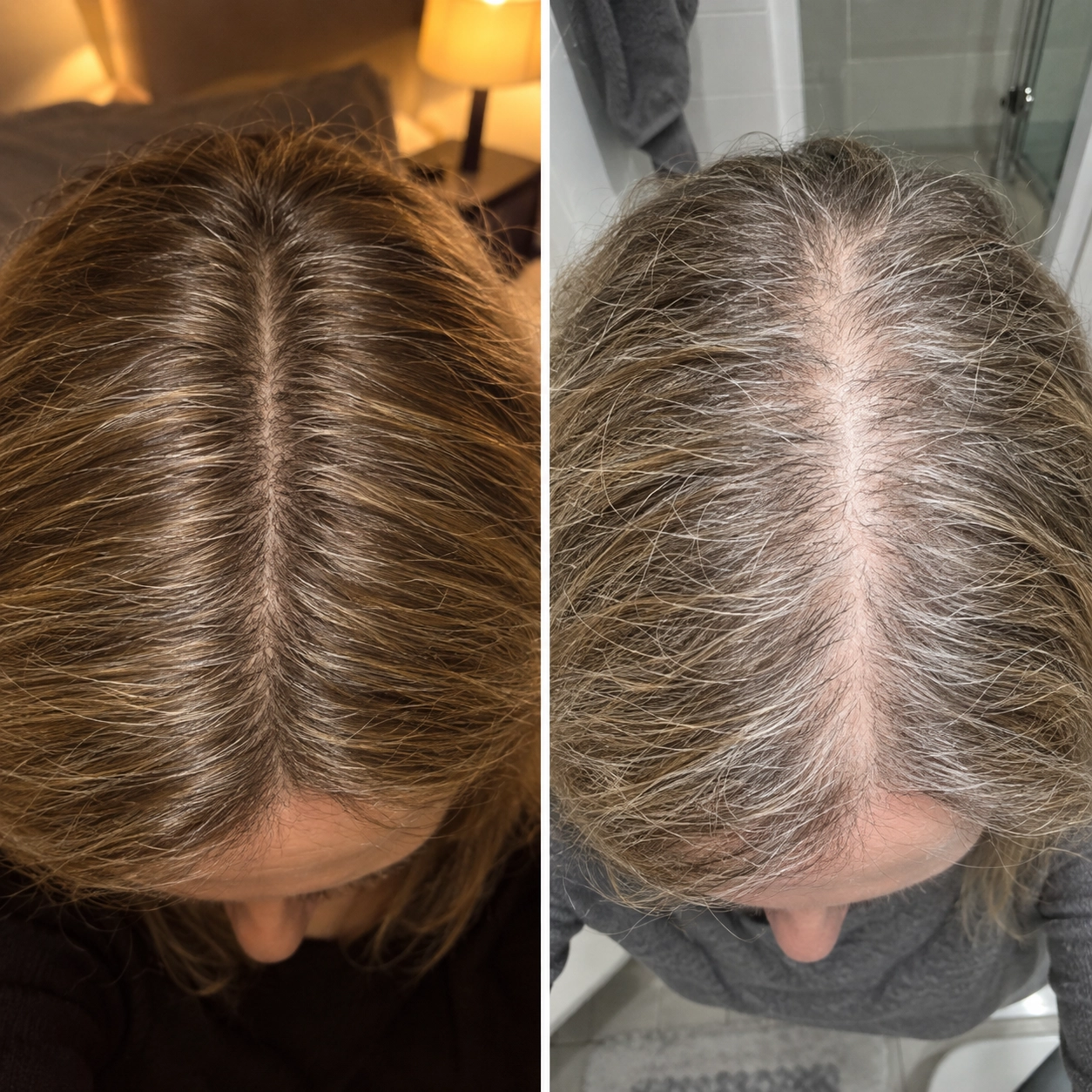
A more visible parting. A smaller ponytail. More hair left behind in your brush.

When your hair starts changing around menopause, even an ordinary morning in front of the mirror can feel unsettling.

You start changing your parting. Comparing old photos. Trying another shampoo. Wondering whether what you are seeing is normal.

But one thing we hear again and again from British women is not simply that they have tried too many products.

It is that nobody ever explained what was actually happening to their hair.

So before you spend money on anything else, including our own product, here are five things worth understanding first.


Menopause and thinning hair: 5 things to understand before trying another product
Your oestrogen levels change around menopause and your hair may change too
1
Your oestrogen levels change around menopause and your hair may change too
You have not changed your routine, yet your hair looks thinner.

As menopause approaches, oestrogen levels begin to fall. That matters because hair follicles respond directly to oestrogen. They are not simply affected indirectly by everything else happening in the body (Ohnemus et al., Endocrine Reviews, 2006).

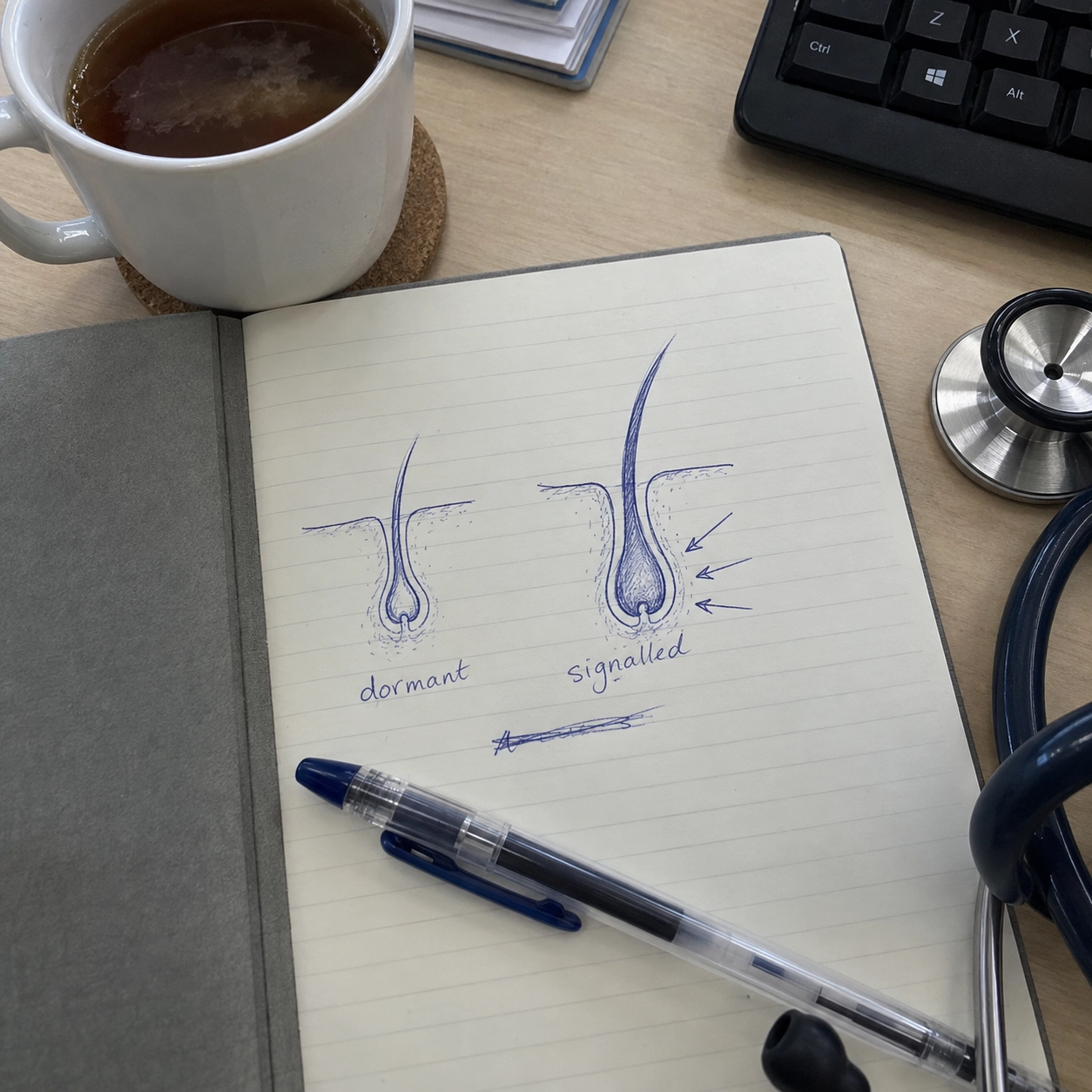
Oestrogen helps support the follicle during its active growth phase. As that hormonal support declines, some follicles may leave the growth phase sooner than they used to.

This is also a time when female-pattern hair loss becomes more common. The typical signs are a gradually widening parting and progressive thinning across the top of the scalp.

Genetics can influence how strongly this happens, which is why the experience varies so much from one woman to another.

It does not mean menopause automatically causes hair loss.

It means your hormonal history matters, and it is one important part of understanding what may be contributing to the change.

Get your iron checked and don't be surprised if it comes back normal
2
Get your iron checked  and don't be surprised if it comes back normal
In the years before your periods stop, they often become heavier and harder to predict. That's worth knowing, because heavier bleeding draws down your iron stores month after month, and low iron is a recognised contributor to hair shedding.

The marker your GP uses is ferritin. Ask for it by name, and say the words “hair loss” when you do  it changes what gets tested and how the result is read. Bring it up alongside your thyroid, which is the other thing worth ruling out at this stage. Both are simple blood tests. Both are free.

Do this first. If low iron is what's driving your shedding, no serum on any shelf will fix it, and you'd be spending money on the wrong problem.

But here is what we hear from British women again and again: the bloods come back, everything sits inside the normal range, and the hair keeps thinning anyway.

That result isn't a dead end. It's information. It tells you the shedding isn't coming from a deficiency you can correct with tablets  which points you somewhere else entirely.

Not at the hair. At the follicle underneath it, and at what changed for that follicle when your oestrogen levels started to fall.


Menopause should not become the explanation for everything
3
Menopause should not become the explanation for everything
When hair changes and menopause happen at the same time, it is easy to assume one is causing the other.

But menopause is not always the whole story. Thyroid problems and low iron are two things a clinician may also consider, particularly in women during midlife.

Changes such as unusually dry, coarse hair or thinning at the outer edges of the eyebrows can sometimes be clues that something else is contributing.

So the better question is not, “Is this just my age?”

It is, “What is actually contributing to this, and what would address the cause?”

A conversation with your GP can help rule out underlying factors before you spend more money trying another product that may be targeting the wrong problem.


Biotin, minoxidil and shampoos: why results do not always meet expectations
4
Biotin, minoxidil and shampoos: why results do not always meet expectations
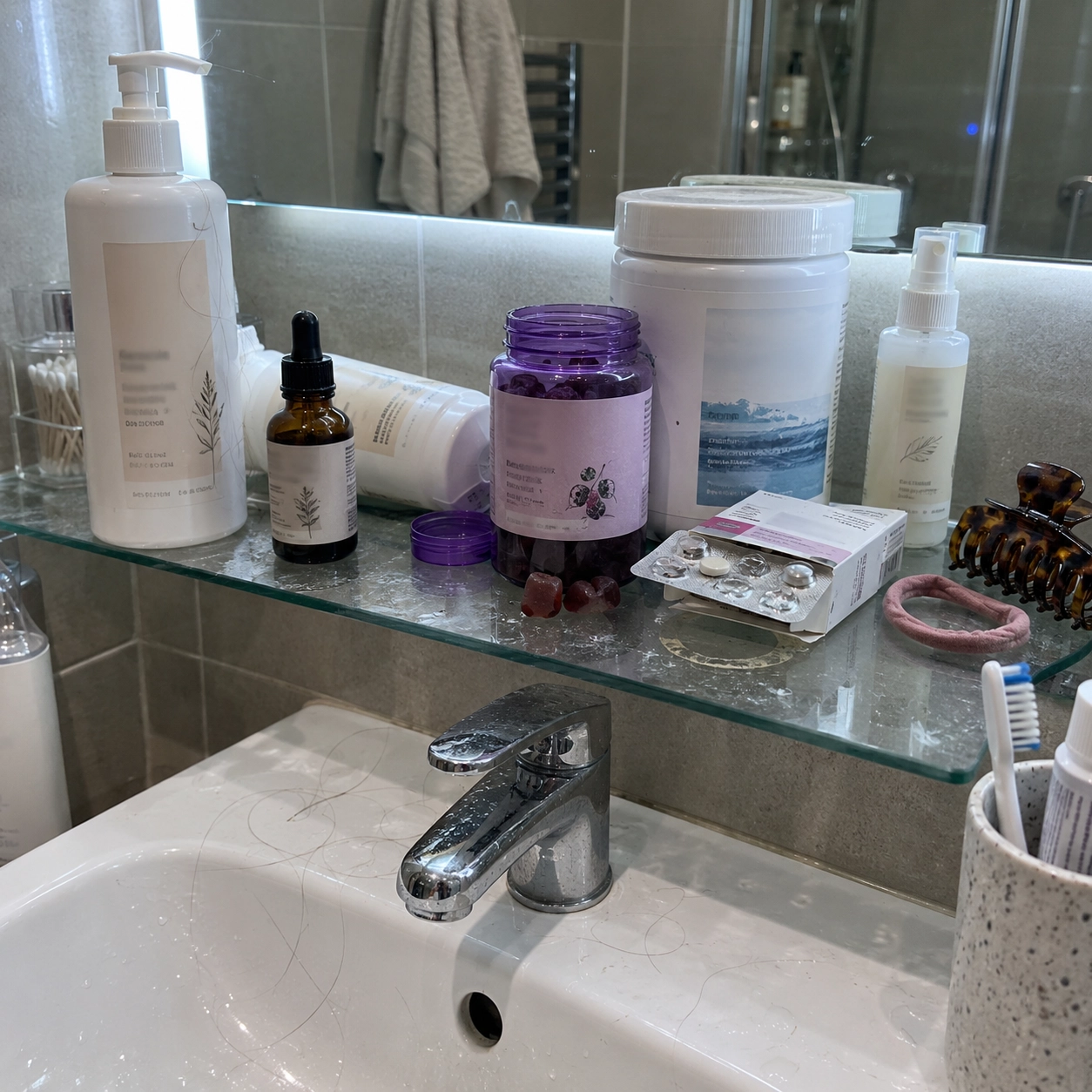
You’ve tried gummies, a thickening shampoo, perhaps even minoxidil. Yet your parting still looks wider than you’d like. It’s frustrating, but these products work in different ways.

Biotin deficiency can affect hair, but it is uncommon. Without a deficiency, there is little evidence that taking extra biotin improves hair growth.

Minoxidil is an evidence-based treatment for female pattern hair loss that acts on the follicles. It usually takes several months to assess, can cause temporary shedding or scalp irritation, and requires continued use to maintain its benefits.

Thickening shampoos can make existing strands look fuller. That cosmetic effect is useful, but it does not mean new hair is growing.

Supplements may help when a nutritional deficiency contributes to shedding. More ingredients, however, do not automatically mean better results.

The hair you can touch is no longer living tissue. The follicle beneath the skin produces it. Understanding whether you need cosmetic volume, correction of a deficiency or treatment for hair loss helps you choose a routine with realistic expectations.

With a scalp serum, look at both the formula and the application
5
With a scalp serum, look at both the formula and the application
Choosing a scalp serum starts with two questions: what’s in the formula, and how easily can you apply it where it belongs?

Peptides are short chains of amino acids. Some act as messengers between cells, and certain peptides are being studied for their potential role in supporting hair growth.

PDRN consists of purified DNA fragments, often derived from salmon. It has been studied in tissue repair and explored for hair growth, largely through injectable treatments. Research on topical use is still developing, so those findings cannot automatically be applied to a scalp serum.

Application matters too. A brush that parts the hair can help place the formula directly onto the scalp. Reaching the scalp’s surface, however, does not establish that ingredients reach the follicle or stimulate growth.

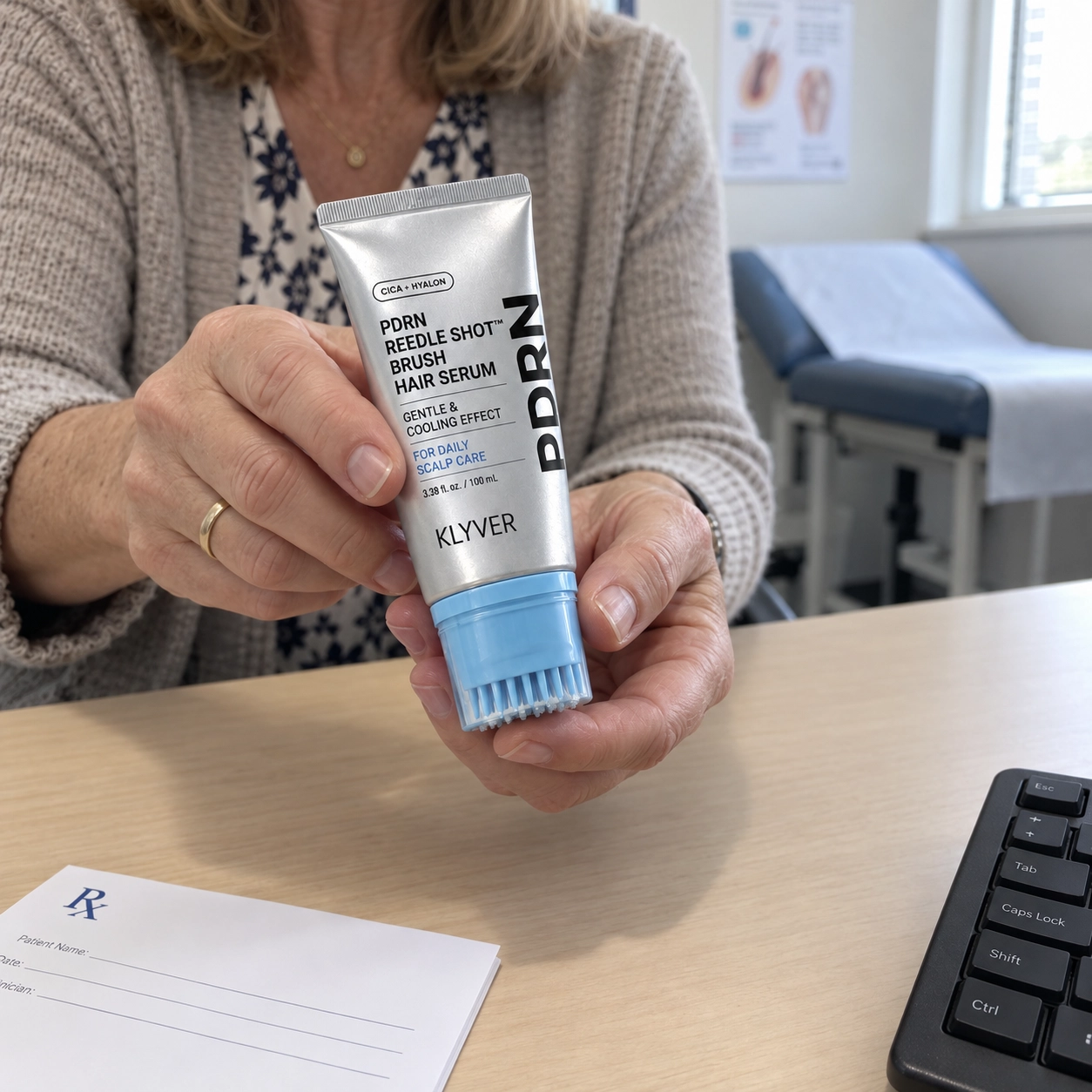
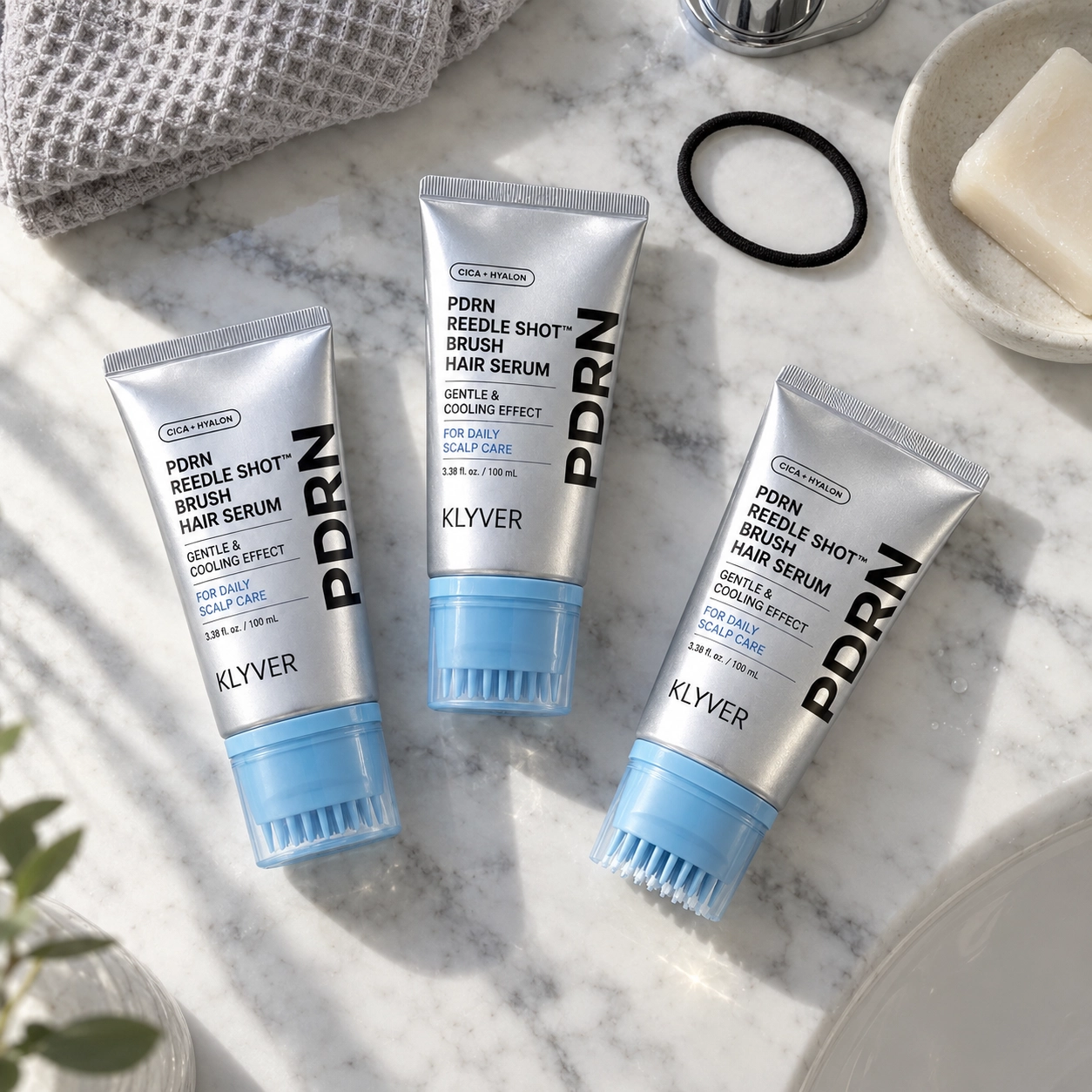
Meet KLYVER, a scalp serum formulated with PDRN and peptides, with a 38-bristle brush designed for targeted application. Its mineral micro-spicules may produce a tingling sensation, although tingling itself is not evidence of absorption or effectiveness.

Use it as directed as part of your cosmetic scalp-care routine. If you’re receiving treatment for a diagnosed cause of hair loss, continue following your clinician’s advice.

Take a photo of your parting before you begin. Use the same lighting and angle for future comparisons, and remember that visible changes take time and results vary.
5 stars
4.8/5 from 10,200+ reviews
What women tell us
Different women, different timelines. Their words, as they wrote them.
Week 12Parting
My GP said "just menopausal thinning, deal with it". Shampoo, biotin, rosemary oil — nothing. This you feel on the scalp, cold and prickly, then it's gone. Took a photo on day one. 12 weeks in and my parting looks narrower. xx
Deborah M., 54, Reading Verified Purchase
Week 14Thyroid
Slow thyroid at 53, hair went straw-like overnight. First six weeks I saw nothing and nearly stopped. Week 14: texture back, top looks fuller. Temples still thin, but it's mine again.
Elaine R., 56, Sheffield
Week 10Crown
Sceptical about the brush thing. But you feel it from the first go — tingling, then absorbed. 10 weeks and my crown looks fuller than it has in years.
Karen V., 52 Verified Purchase
Your parting, one hair cycle from now.
Understanding why your hair is changing is the first step. Now you can give your scalp a consistent routine with Klyver.

Buy two tubes and get your third free, with free UK delivery.

Why three? Visible changes take time. Three tubes help you stay consistent over the weeks ahead, though results vary and no number of tubes guarantees regrowth.

You have 60 days to decide whether Klyver is for you. If it isn’t, request a full refund, even if you’ve opened a tube. See the full guarantee terms for details.

Take a photo of your parting tonight. Then start your routine.
CheckCircle
Buy 2, Get 1 Free  pay for two, receive three
CheckCircle
Free UK delivery
CheckCircle
60-day money-back guarantee 
Your parting, one hair cycle from now.