Menopausal hair loss starts with the follicle, not the hair and oestrogen was holding it up
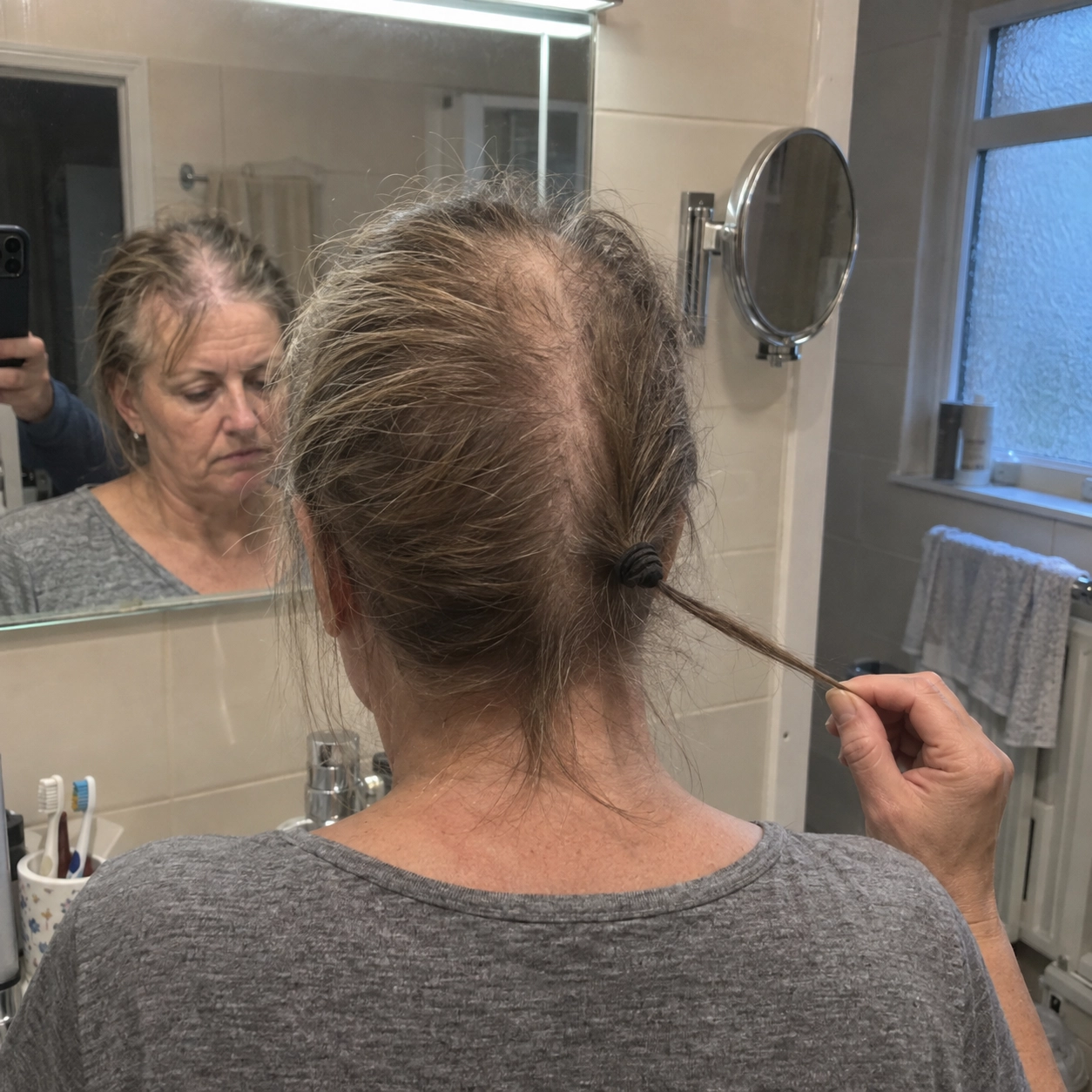
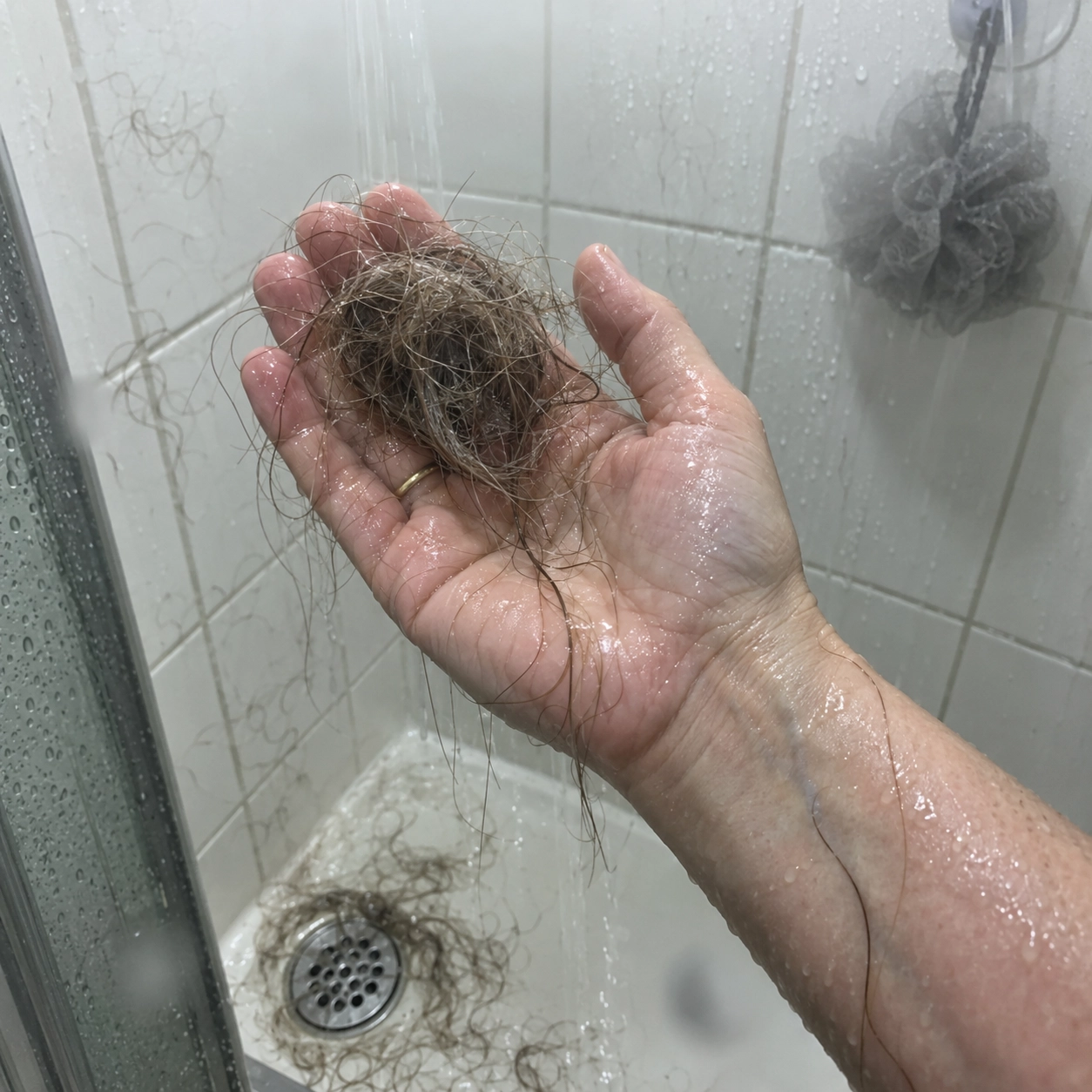
More hair in the shower. Less volume in your ponytail. A parting that looks wider than it used to. When you're losing hair around the menopause and you haven't changed a thing about your routine, it is genuinely unsettling.
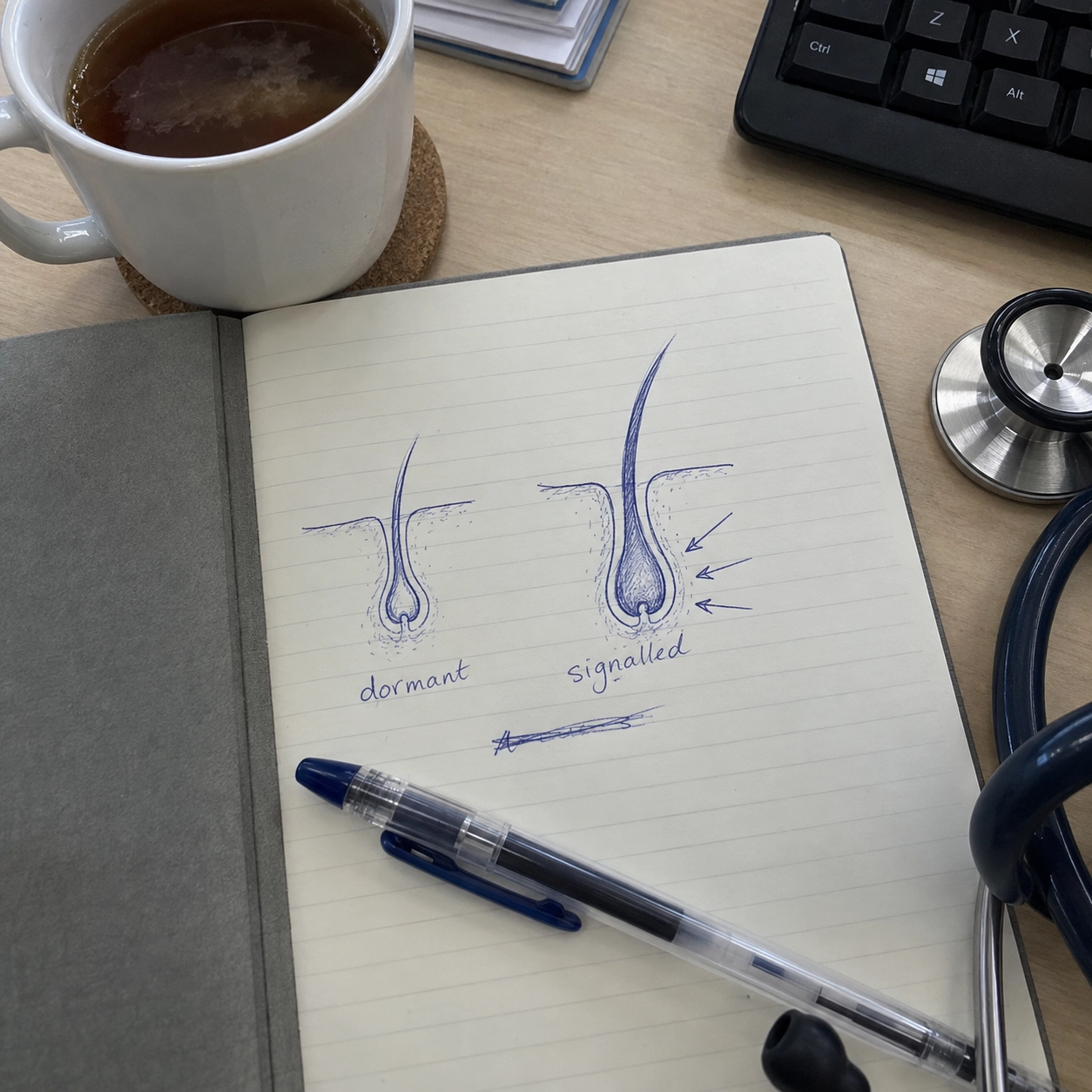
Oestrogen helps regulate the hair growth cycle, and hair follicles carry their own oestrogen receptors — they are a direct target for the hormone, not a bystander (Ohnemus et al., Endocrine Reviews, 2006). As hormone levels change during the menopause, that can contribute to both increased shedding and changes in how hair grows back.
Many women also develop female pattern hair loss, where affected follicles gradually produce finer, shorter hairs. This process is called miniaturisation, and it is why the parting widens over time rather than the hair simply falling out all at once.
Shedding and miniaturisation are different processes, and menopausal hair loss often involves both at the same time. What you're seeing may be about how your hair is growing, not damage to the strands themselves.
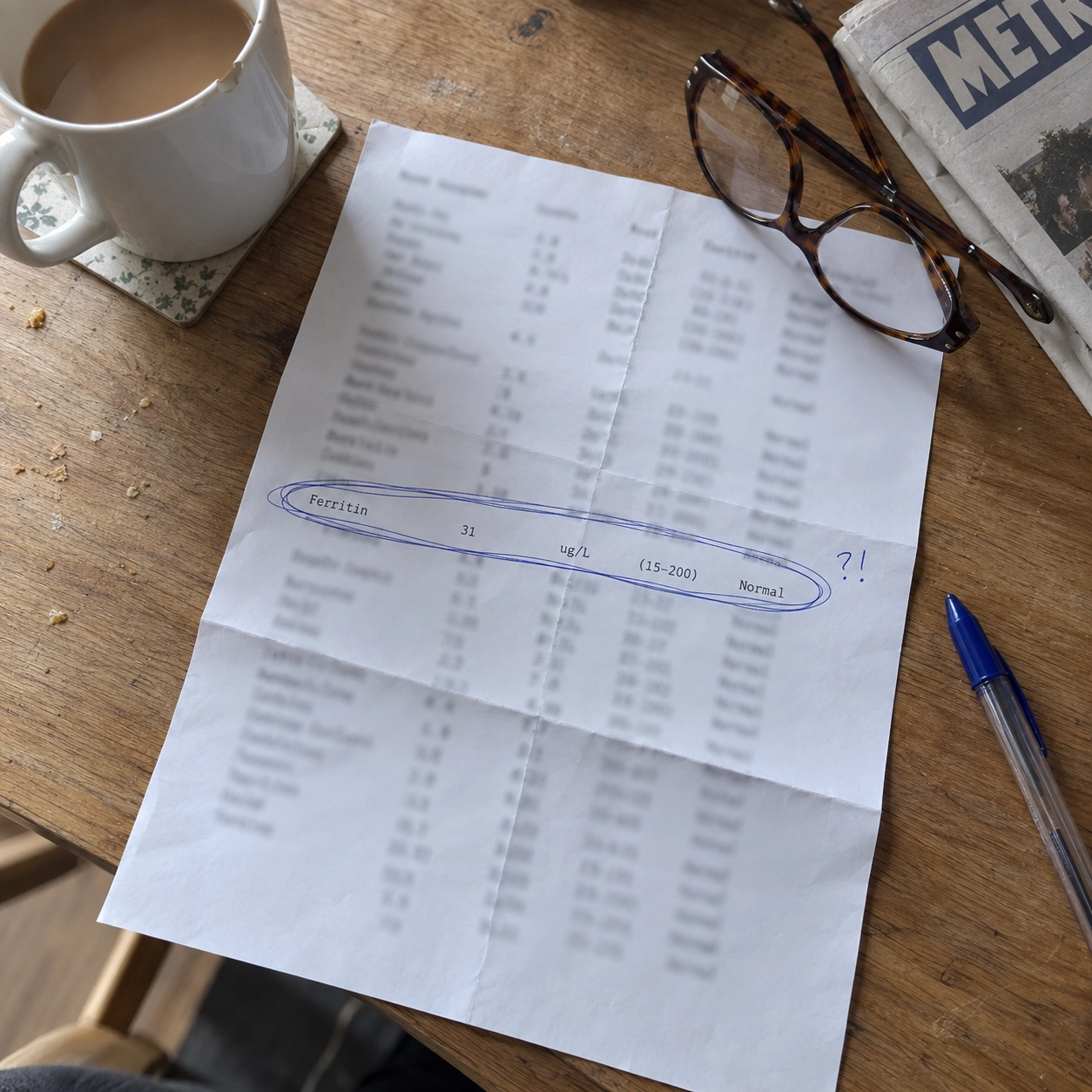
Blood tests can help identify contributing factors, such as iron deficiency or thyroid problems. But they don't directly show follicle miniaturisation. That usually requires an examination of your hair and scalp.
So even when your blood results come back normal, the hair loss you're noticing is real and still deserves attention.